Research Brief
Inflation
November 2026

Inflation Broadens Beyond Recent Pressure Points, Adding Headwinds to CRE
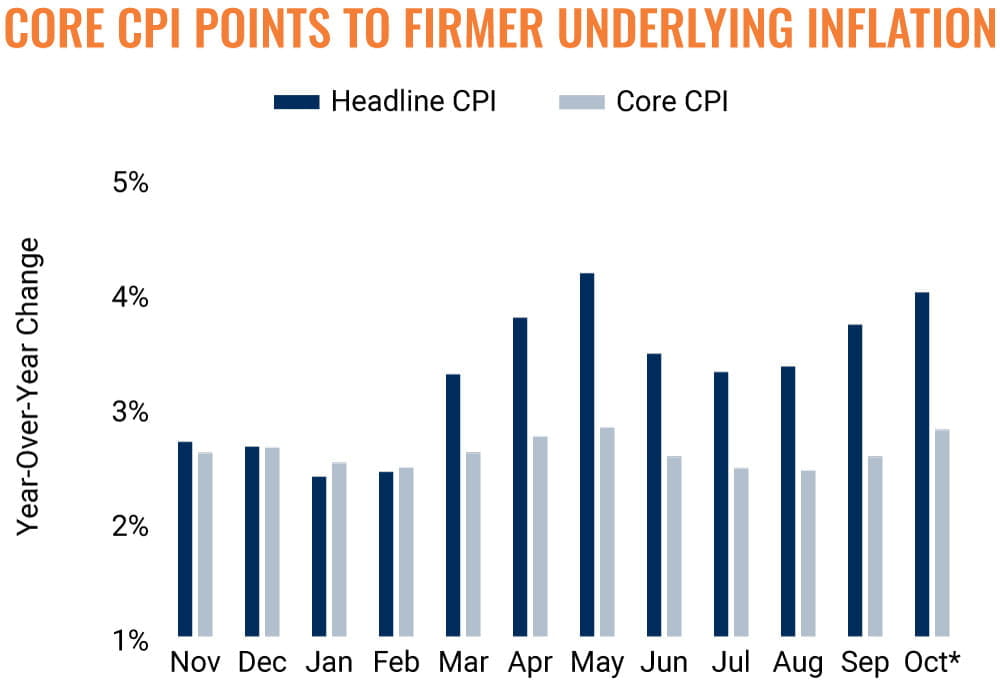
Rising costs could further filter into property operations. Electricity costs advanced 0.9 percent in October, the largest monthly increase in six months. Broader electricity demand is also rising structurally, with the U.S. Energy Information Administration expecting national electricity load to increase 1.9 percent in 2026 and 2.5 percent in 2027. Some of the strongest growth is in regions with substantial data-center development. Higher electricity costs could add to utility expenses for owners across several property types, including multifamily, retail, and industrial. Rising utility, transportation, and restaurant prices could also constrain consumer purchasing power, with more direct implications for retailers. At the property level, these pressures could become more consequential for non-triple-net-leased assets with limited ability to raise rents or otherwise offset rising costs. This dynamic could place greater emphasis on expense management and revenue growth as owners seek to preserve income amid a more challenging cost backdrop.
Key Takeaways
- Core CPI increased 0.3 percent for a third straight month, signaling that underlying price growth is proving difficult to moderate.
- Expectations for additional monetary tightening strengthened, reducing the likelihood of meaningful borrowing-cost relief in the near term.
- Elevated financing costs may challenge properties with upcoming loan maturities, potentially prompting additional equity contributions or sales.
- Rising electricity, transportation, and food costs could pressure property operations and tenant margins, extending inflation’s impact beyond financing conditions.
4.0% |
2.8% |
|
Estimated Increase in |
Estimated Increase in |
* Estimated
Sources: Marcus & Millichap Research Services; Bureau of Labor Statistics; Federal Reserve Bank
of St. Louis; CME FedWatch; The New York Times; U.S. Energy Information Administration
TO READ THE FULL ARTICLE