Research Brief
Financial Markets
November 2026

Fed Pauses Rate Increases, Though Inflation Remains Elevated
Divided committee holds the Effective Federal Funds Rate. Many economic metrics remain healthy while inflation lingers above the Federal Reserve’s 2 percent target. Still, the Federal Open Market Committee voted 10-2 at its October meeting to maintain the target range for the overnight lending rate, with a lower bound at 3.75 percent. The two dissenters favored a 25-basis-point hike. The FOMC said it needed more incoming data before deciding how to return inflation to target in a timely manner. Wall Street participants are anticipating a pause rather than a pivot; after the decision, markets priced in a roughly 85 percent chance of a 25-basis-point hike in December.
Economic growth keeps the committee focused on inflation. Real GDP expanded at an annualized pace of 3.4 percent in the third quarter, accelerating from 2.2 percent in the prior period. Underlying private domestic demand also increased, growing 4.9 percent compared with 4.6 percent in the second quarter. Capital spending, while still led by technology, is now spreading to other categories, as Federal Reserve Chairman Kevin Warsh noted at the press conference. Meanwhile, hiring has cooled as the economy added only 29,000 net jobs in September, and unemployment edged up to 4.2 percent. Jobless claims, however, remain near historic lows, reflecting a low-hire, low-fire environment. Moving forward, inflation remains the committee’s main concern, given overall economic activity. Beyond its near-term rate decisions, the Fed’s balance-sheet changes remain under review, with task-force recommendations expected to reach the FOMC early next year rather than influence the current policy.
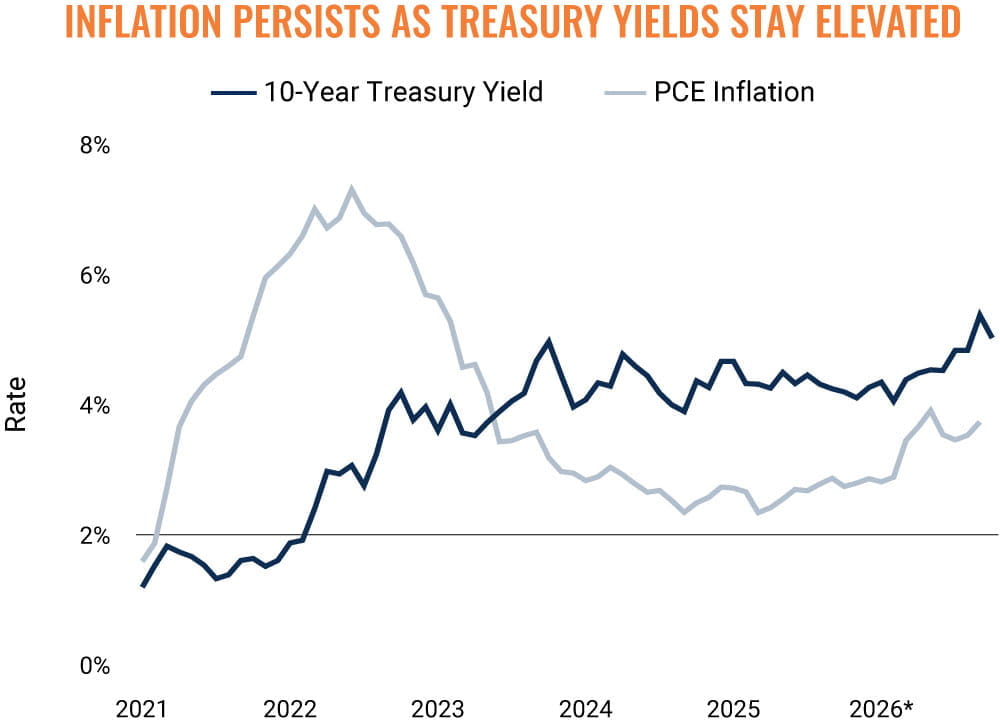 Energy-driven inflation lands unevenly. Headline PCE rose to 3.6 percent year over year in September, while core PCE grew by 3.1 percent in the same period. Chairman Warsh noted that energy prices have climbed again in recent weeks, as disruptions near the Strait of Hormuz and the Bab el Mandeb Strait keep crude oil prices elevated. Energy and transportation consume a larger share of household budgets in some parts of the country, so the effect has been uneven. The Northeast and Midwest saw higher inflation than the South and West, weakening purchasing power unevenly. The Midwest, in particular, has exceeded the national rate for eight straight months because of greater reliance on driving and heating fuels, with smaller metros facing the most pressure. Sun Belt markets, particularly Texas and the Mountain region, have seen milder price growth, while a few high-cost coastal and western metros remain above average. These inflation gaps create uneven cost pressures for property owners across regions, which can influence purchasing power for CRE.
Commercial Real Estate Outlook
Elevated rates could push price discovery. After the meeting, the 10-year Treasury held at 4.91 percent as of Nov. 2. Although still elevated, this rate is roughly 30 basis points below its recent peak in early October. Meanwhile, debt maturities add pressure, as over $650 billion in CRE loans are set to come due in 2027. Much of this debt originated at 3 to 4 percent, but rates are now 6 to 7 percent. Owners who bought in 2020 and 2021 may need to inject additional equity or sell, which could speed up price discovery. In this environment, properties with wider cap rates and assets with clear income-growth potential are likely to attract buyer interest.
Uneven inflation could sharpen geographic selectivity. Regional inflation gaps may prompt investors to be more selective. Markets less exposed to inflationary pressure should benefit from slower expense growth and relatively stronger tenant purchasing power, which can support a property’s operating income. In higher inflation regions, rising utility, insurance, and labor costs can squeeze margins even as rents climb. Energy-exposed markets remain viable, though investors may seek higher acquisition cap rates to compensate for greater operating-cost risk.
4.91% |
3.1% |
|
10-Year Treasury Yield on Nov. 2 |
Core PCE Inflation as of September 2026 |
*As of Nov. 2 | Sources: Marcus & Millichap Research Services; CME Group; CoStar Group, Inc.;
Federal Reserve; Mortgage Bankers Association; U.S. Bureau of Economic Analysis; U.S. Bureau
of Labor Statistics; U.S. Department of the Treasury
TO READ THE FULL ARTICLE