Research Brief
Canada Inflation
November 2026
Easing Core Inflation Supports a Rate Pause as CRE Investment Recovers
Higher gasoline prices keep headline inflation elevated. Canada’s inflation rate held at 3.1 per cent in October as a larger contribution from energy offset softer price growth elsewhere in the basket. Energy prices were little changed from September, but a lower yearearlier comparison pushed annual energy inflation up from 19.0 to 21.8 per cent. Gasoline remained the main driver, with prices nearly one-third higher than a year earlier. The broader basket showed less upward momentum, with the seasonally adjusted CPI rising just 0.2 per cent on the month. Firmer shelter costs and faster grocery inflation added pressure, while modest price gains across several goods categories and declines in some discretionary services suggest subdued consumer demand is helping contain inflation.
Contained core inflation calls for a gradual approach to tightening. Inflation excluding food and energy slowed by 30 basis points to 1.8 per cent in October, while the average of the Bank of Canada’s preferred core measures also edged down 10 basis points to 1.9 per cent. Their three-month annualized pace also eased to 2.7 per cent. As a result, spillover effects from higher energy costs appear concentrated in directly exposed categories. October’s rate hike to 2.5 per cent likely served as insurance against broader passthrough and reinforced the Bank’s inflation-fighting credibility. Still, three consecutive months of job losses and softer-than-expected third-quarter growth suggest the move may have been premature. A December pause now appears likely and will give policymakers time to gauge whether energy costs are spreading more widely. Markets may be pricing in more tightening than is warranted, with a 3 per cent terminal rate appearing likely.
Commercial Real Estate Outlook
Essential spending supports grocery-anchored retail. Grocery inflation picked up 30 basis points to 2 per cent in October, while health and personal care prices rose 0.4 per cent monthly. Meanwhile, prices changed little across recreation and household furnishings and actually fell for several discretionary services. This split is consistent with households prioritizing everyday purchases over nonessential spending. For retail properties, steady demand for groceries and personal care products can sustain repeat visits to neighbourhood centers and support nearby tenants. Retailers reliant on discretionary purchases may face greater pressure to offer promotions to drive sales, which could weigh on margins and temper leasing demand.
Larger deals drive investment recovery. Year-to-date dollar volume through the third quarter rose 15 per cent from the same period last year, with the gain likely to strengthen as more Alberta sales are recorded. Deals above $20 million drove the increase, suggesting institutional capital is returning and confidence in the sector is improving. Renewed upward pressure on borrowing costs slowed activity in the third quarter, but the broader recovery is likely to continue. Buyers and sellers have had more time to adjust to prevailing valuations, while properties with durable tenant demand can provide steady income during periods of uncertainty. Contractual rent increases and the ability to reset rents at lease expiry also help protect income against inflation.

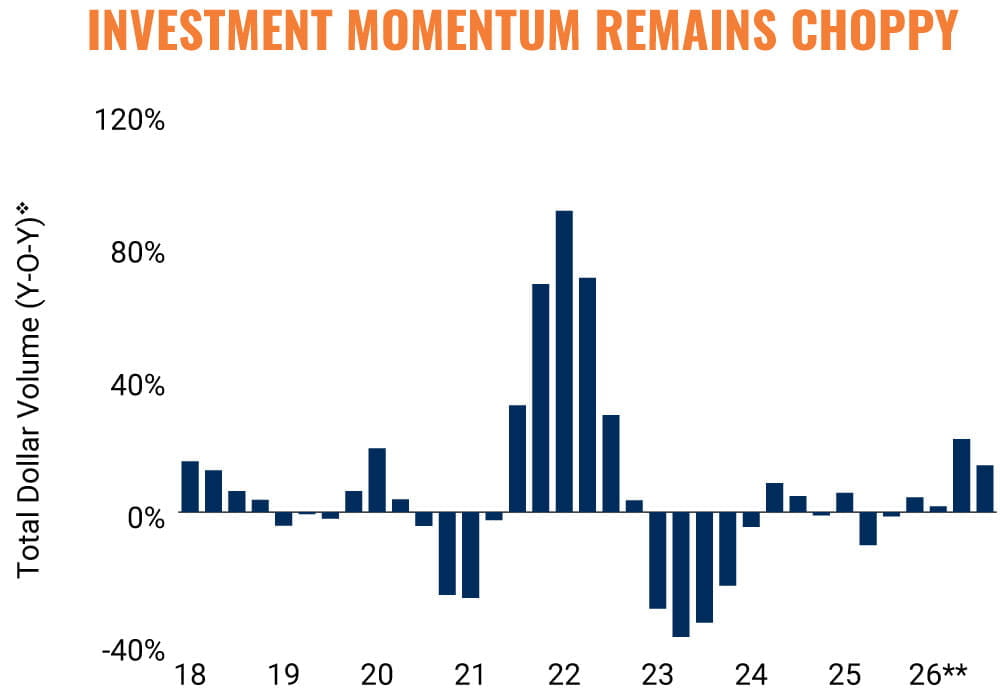
* Through October; ** Through 3Q; v Trailing 12-month total | Sources: Altus Data Solutions;
Capital Economics; CoStar Group, Inc.; Oxford Economics; Statistics Canada
TO READ THE FULL ARTICLE