Research Brief
Interest Rate Trends
September 2026

Multiple Forces Drive Rates Higher, Creating Challenges and Opportunities
Volatile macroeconomic data clouds the outlook. Substantial revisions and evolving economic conditions continue to shape perceptions of future policy direction.
- August payroll growth exceeded expectations with the addition of 162,000 jobs, though large revisions to recent employment reports have reduced the reliability of initial monthly estimates.
- July payrolls were revised from a loss of 23,000 jobs to a gain of 21,000, illustrating the volatility of preliminary data.
- Despite uncertainty surrounding the labor market, stronger employment conditions provide the Federal Reserve greater flexibility to raise interest rates.
- Inflation risks remain elevated as higher energy prices and new tariffs add upward pressure to consumer costs. Higher financing costs are creating pressure on transaction activity across property sectors.
- The combination of resilient employment and persistent inflation has increased expectations for additional tightening.
- As a result, rising expectations for future rate hikes have contributed to the anticipation of higher interest rates generally.
Higher borrowing costs reflect more than Federal Reserve policy. Several long-term market dynamics are influencing capital costs and allocation beyond the actions of monetary authorities.
- U.S. Treasury borrowing needs remain substantial as deficit financing and debt refinancing requirements drive record levels of debt issuance
- Traditional sovereign buyers have reduced their participation in the Treasury market, shifting a greater share of debt absorption to private investors.
- Higher Treasury yields are being used to attract domestic and international private capital.
- Borrowing costs are rising globally, with sovereign bond yields increasing across Europe, the United Kingdom, and Japan.
- The potential for tighter monetary policy, elevated Treasury issuance, and rising global yields is contributing to a structurally higher interest rate environment.
Silver-lining of higher rates. Development activity is slowing as construction and financing costs rise, potentially creating favorable supply-demand conditions across many property sectors.
- Conventional commercial real estate borrowing costs have risen into the 6-to-7 percent range, increasing financing costs for investors.
- Higher debt costs continue to pressure underwriting assumptions and widen the pricing gap between buyers and sellers.
- Despite higher rates, lender liquidity remains relatively strong, with multiple debt providers actively pursuing new originations.
- Elevated financing costs, higher construction expenses, tariffs, and labor shortages are making new development projects increasingly difficult to justify.
- As a result, commercial real estate deliveries are slowing across many property sectors.
- Demand remains positive across many markets, and constrained supply could tighten vacancy rates and support the next cycle of rent growth.
- While higher interest rates may continue to weigh on asset values, improving property fundamentals and future rent growth could create attractive opportunities for long-term investors.
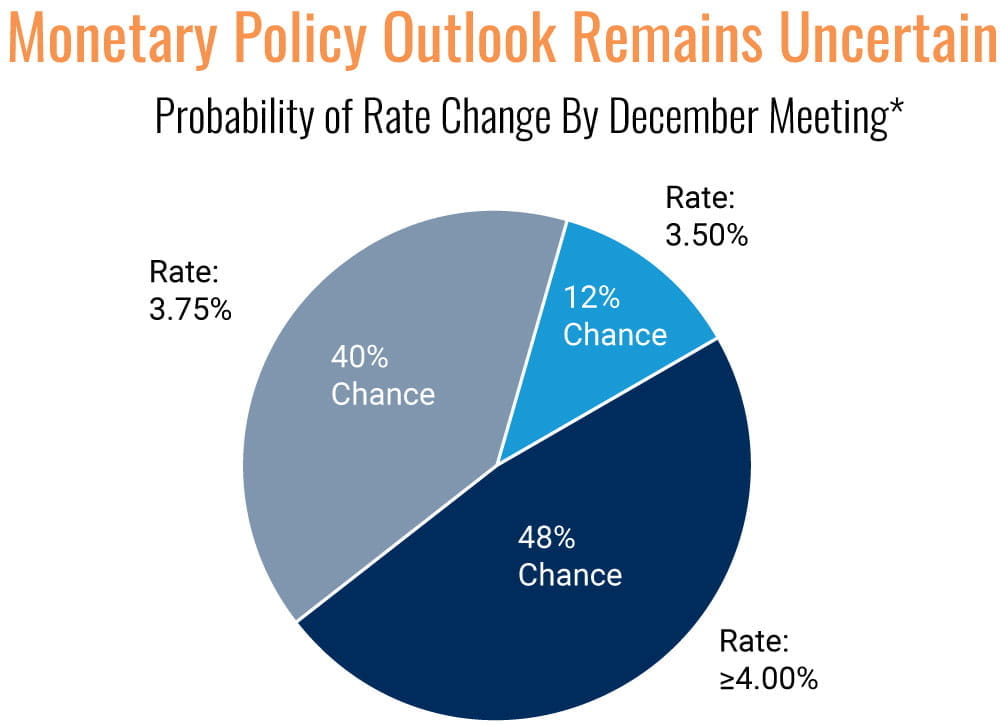
* Probabilities as of September 9th Sources: Marcus & Millichap Research Services; Bureau of Labor Statistics; CME Group; CoStar Group, Inc.; Federal Reserve; Mortgage Bankers Association; Real Capital Analytics; RealPage, Inc.; SIFMA; Trading Economics; U.S. Department of the Treasury; U.S. Energy Information Administration
TO READ THE FULL ARTICLE