Research Brief
Inflation
September 2026

Limited Inflation Progress Tempers CRE Momentum
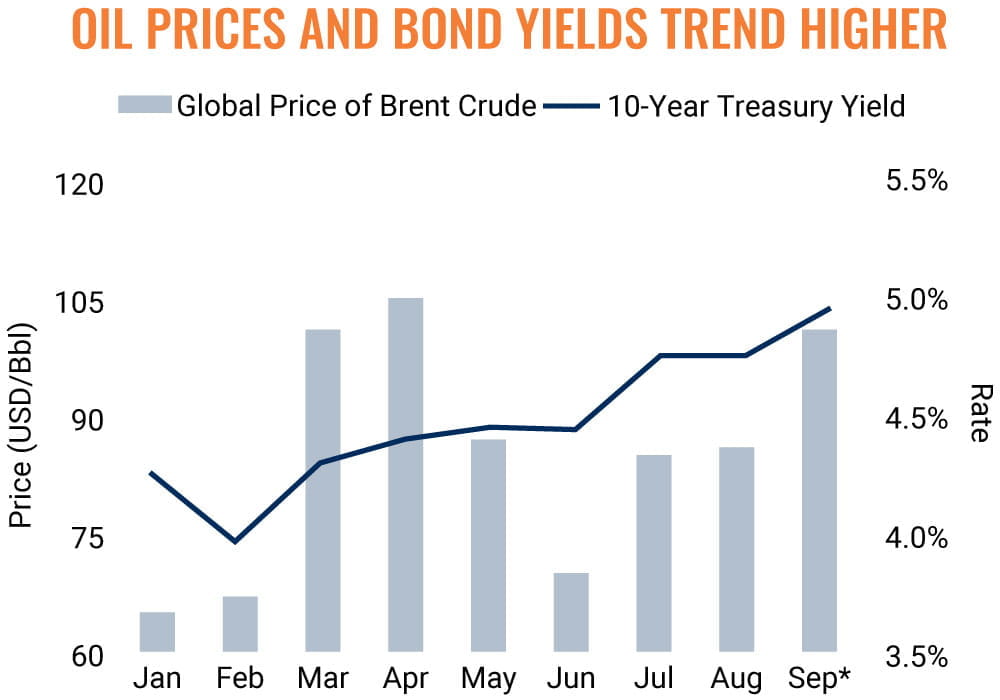
Elevated borrowing costs could slow transactions. With longterm interest rates unlikely to provide substantial near-term relief, commercial real estate borrowers may continue to face challenging financing conditions. Going forward, higher debt costs could prolong refinancing hurdles, reduce buyer leverage, and keep buyers and sellers apart on pricing, thereby limiting future growth in transaction activity. Development has become less feasible, constraining future supply and potentially benefiting existing properties once near-term economic headwinds subside.
Fuel and transportation costs weigh on industrial tenants. The energy index increased 2.1 percent in August after declining during the prior two months, while transportation services rose 0.5 percent, the largest monthly increase since March. Higher fuel and freight expenses could pressure distribution and logistics tenants, particularly those operating truck-intensive networks. Net absorption in the first half of the year has about kept pace with new supply, sustaining vacancy of 7.8 percent in June, unchanged since September 2025 but still a more-than-decade high. Construction activity is now tapering, however, which should ease supply pressure and provide some protection against further vacancy expansion over the medium term.
Key Takeaways
- August CPI showed that inflation remained sticky, with higher gasoline prices driving more than one-third of the 0.4 percent monthly increase.
- Growing federal funding needs and inflation risks, including those tied to shifting trade policies, could keep long-term yields above previous norms.
- Costly debt could keep buyers and sellers apart on pricing. However, lender liquidity remains strong for now, supporting transaction activity.
- Industrial supply pressure should ease as development slows, helping existing properties offset potentially softer tenant demand and rising distribution expenses.
3.4% |
2.4% |
|
Increase in Headline CPI Year-Over-Year |
Increase in Core CPI Year-Over-Year |
*As of Sept. 14, 2026
Sources: Marcus & Millichap Research Services; Bureau of Labor Statistics; Federal Reserve; AAA
TO READ THE FULL ARTICLE