Research Brief
Canada Inflation
September 2026

Broadening Inflation Pressures Raise Likelihood of Rate Hike
Commercial Real Estate Outlook
Rent growth supports multifamily but adds to policy concerns. Shelter costs rose 0.3 per cent month-over-month in August, driven by a particularly strong 0.7 per cent increase in rents. Persistent rental inflation should continue to support revenue growth for multifamily owners, although affordability pressures and provincial rent regulations may limit how quickly market gains translate into property-level income. Mortgage interest costs also increased by 0.3 per cent and could accelerate as higher bond yields flow through to borrowers. While elevated ownership costs will likely keep more households in the rental market, supporting occupancy, the growing likelihood of higher interest rates presents a renewed financing and valuation headwind for multifamily investors.
Service-oriented retail demonstrates pricing power. Inflation trends across discretionary categories remained uneven in August, highlighting the increasingly selective nature of consumer demand. Recreation, education, and reading costs rose 0.7 per cent monthover-month, including increases of 1.9 per cent for airfares and 3.2 per cent for travel tours, while communications prices advanced 1.5 per cent. Conversely, clothing and footwear prices declined 0.4 per cent, signalling a more competitive environment for traditional merchandise retailers. This divergence should favour well-located storefront properties with experiential, entertainment, and personalservice tenants, while apparel and other goods-based retailers may face greater pressure on margins and leasing capacity.

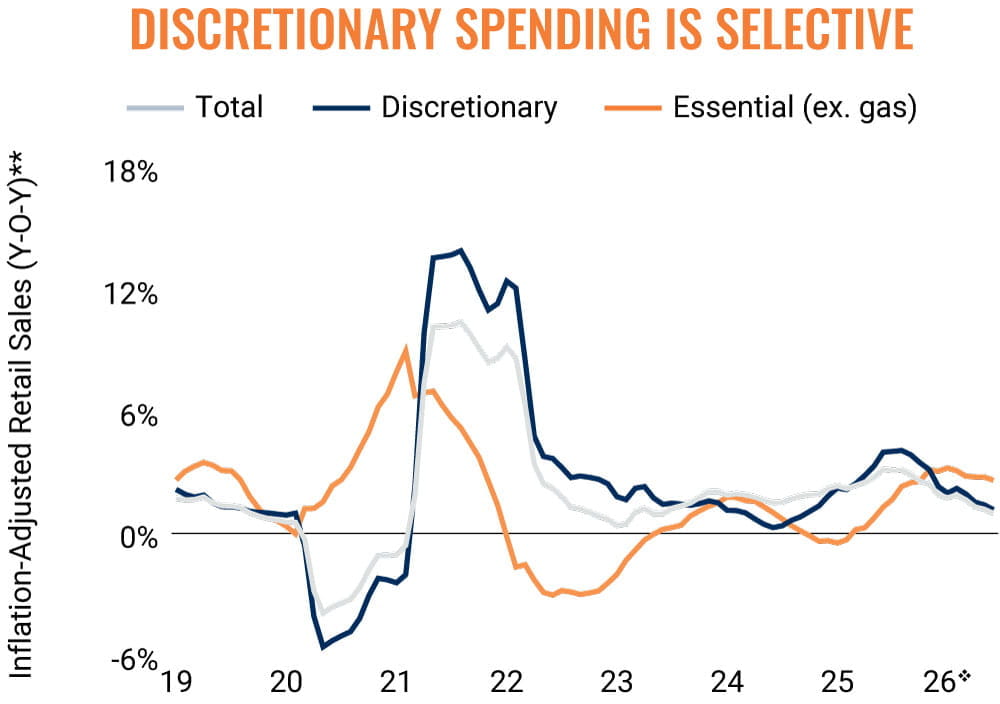
* Forecast; ** Trailing 12-month total; v Through June | Sources: Altus Data Solutions; Capital
Economics; CoStar Group, Inc.; Oxford Economics; Statistics Canada
TO READ THE FULL ARTICLE