Research Brief
Inflation
August 2026

Pressure on Purchasing Power Carries Implications for Commercial Real Estate
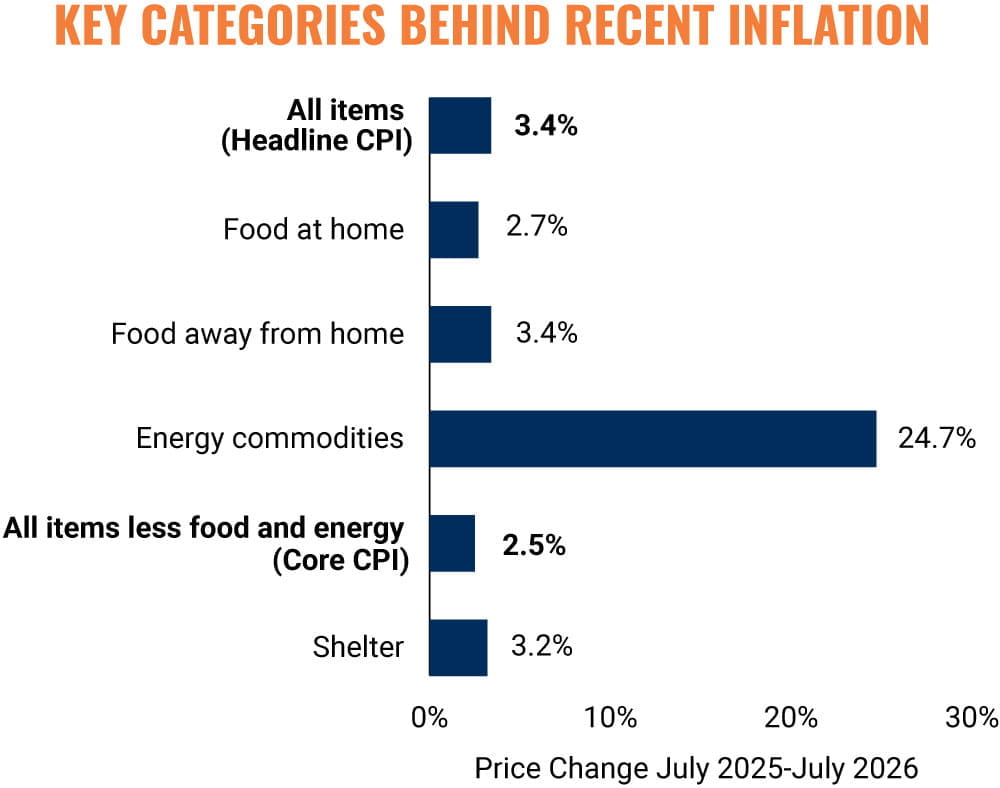
Consumer spending could face additional headwinds. Grocery prices increased 2.7 percent year-over-year in July, while restaurant prices rose 3.4 percent. Although this divergence may suggest consumers remain willing to spend on discretionary dining, it may also signal vulnerability if household purchasing power weakens further. Retail property fundamentals likewise present a mixed picture. While vacancy remained 60 basis points below its historical average, space demand has been volatile. Net space relinquishment occurred in three of the past six quarters, a pattern not observed nationally outside of 2020 since at least 2000.
Hospitality sector might soften through year-end. Energy costs remained elevated in July, up 24.7 percent year-over-year, while airfares increased 25.5 percent. At the same time, the leisure and hospitality sector lost 40,000 jobs nationally last month, and hotel occupancy declined 20 basis points in June despite World Cuprelated travel demand. With transportation costs still elevated and travel demand showing signs of moderation, hotel performance could face additional headwinds through year-end.
Key Takeaways
- July’s inflation report should ease immediate concerns about price pressures, though policymakers will receive additional data before the Fed’s meeting in September.
- Slower shelter-cost growth helped restrain headline inflation, but weakening real wage gains suggest purchasing power remains under pressure.
- Consumer activity remains resilient in some discretionary categories, though demand for retail space continues to trail pre-pandemic norms.
- Elevated travel costs and softer hospitality employment trends suggest tourism-related spending could lose momentum later this year.
3.4% |
2.5% |
|
Increase in Headline CPI Year-Over-Year |
Increase in Core CPI Year-Over-Year |
* Through May Sources: Marcus & Millichap Research Services; Bureau of Labor Statistics; Federal Reserve
TO READ THE FULL ARTICLE