Research Brief
Canada Tariffs
August 2026

Renewed Trade War Has Implications Across Canada’s Economy and CRE Sector
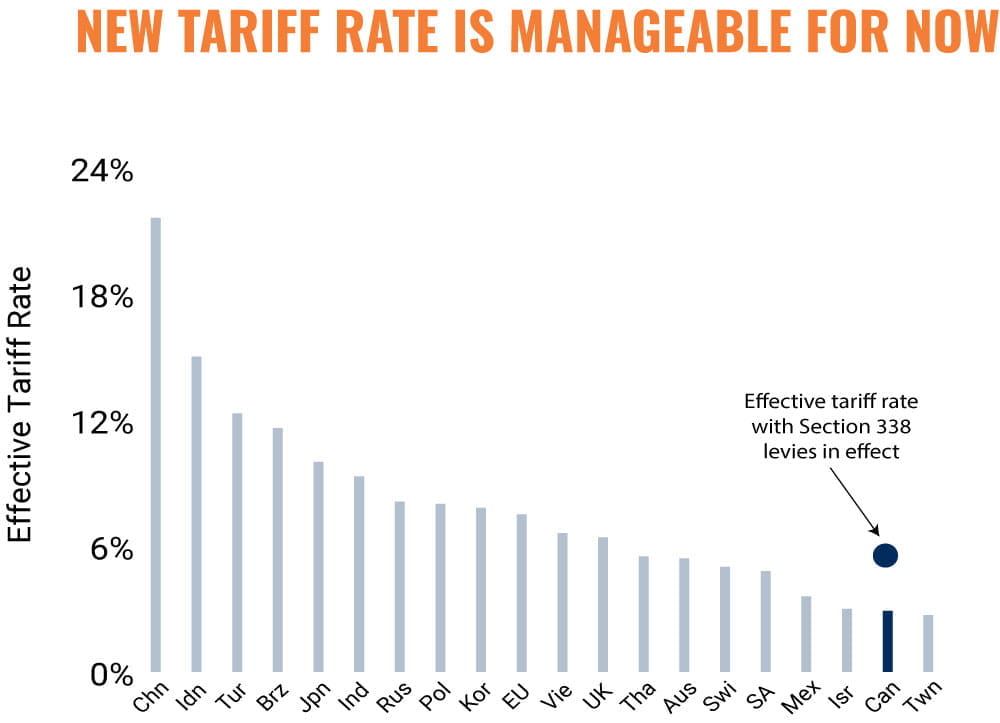
Trade exposure creates uneven outlooks. Ontario and Quebec face the greatest risk, given their large manufacturing bases and U.S. supply chain links. Resource-oriented provinces are likely to remain relatively resilient. For real estate, industrial properties tied to manufacturing and cross-border trade face the clearest nearterm exposure, particularly in Southwestern Ontario and Quebec. Softer hiring and investment may reduce demand for office and retail space. However, limited construction, healthy property fundamentals, and stable interest rates might limit broader decline. Logistics facilities supporting domestic distribution and alternative trade corridors, meanwhile, could benefit as supply chains adapt.
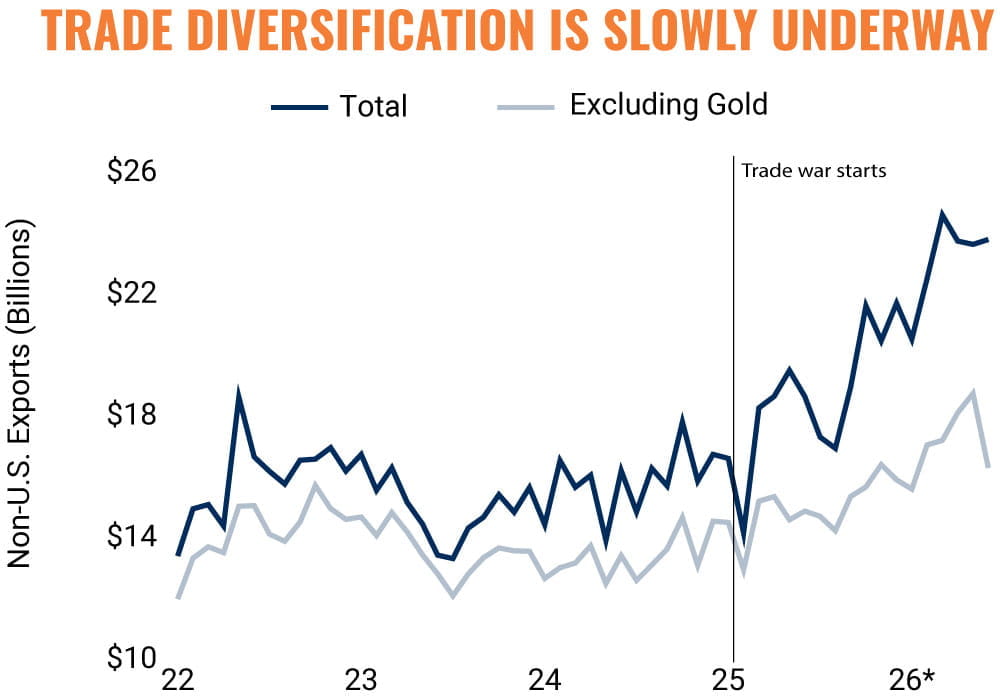
Diversification efforts should support longer-term investment. Canada has increased exports outside the U.S., but recent gains have yet to represent a meaningful structural shift away from its largest trading partner. Governments are consequently emphasizing international trade corridors and domestic infrastructure, including ports, railways, highways, and energy networks. These investments will take time to reduce U.S. dependence, but they should strengthen economic resilience and improve access to overseas markets. For commercial real estate, shifting supply chains and infrastructure investment could support industrial and logistics development around major ports, intermodal hubs, and transportation corridors.
* Through June | Sources: Altus Data Solutions; Capital Economics; CoStar Group, Inc.; Oxford
Economics; Statistics Canada
TO READ THE FULL ARTICLE