Research Brief
Canada Employment
August 2026

Improving Jobs Market to Benefit CRE Performance
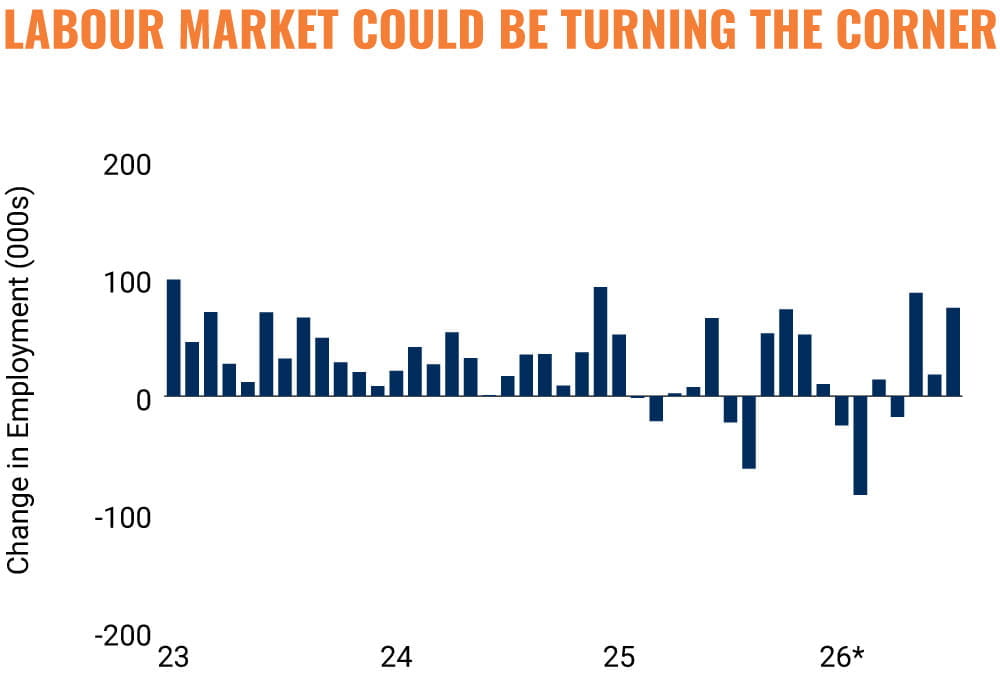
Workforce recovery gains momentum. Hiring strengthened considerably in July, with employment rising by 75,000 positions, well above expectations and lifting the employment rate 10 basis points to 60.9 per cent. Gains were split between full- and part-time positions and were concentrated in the private sector, while the unemployment rate declined for a third consecutive month to a two-year low of 6.4 per cent. Hiring was also broad-based, led by wholesale and retail trade, finance and real estate, professional services, and construction. Ontario accounted for the majority of the national increase, while British Columbia also posted another solid gain. Despite stronger hiring, wage pressures continued to moderate, with average hourly earnings growth slowing 50 basis points to 2.8 per cent year-over-year.
Improving growth reduces pressure for monetary support. July’s employment results add evidence that Canada’s economy is gaining momentum. Combined with preliminary estimates of a solid rebound in second-quarter GDP, the recent acceleration in hiring should ease concerns about Canada’s economic outlook and further reduce the likelihood of additional rate cuts. However, policymakers are unlikely to pivot toward tightening in the near term. Wage growth has continued to moderate, and underlying inflation pressures remain relatively contained, giving the Bank of Canada flexibility to keep its overnight rate unchanged at 2.25 per cent through the remainder of the year. A more stable economic and interest rate environment should also provide greater visibility for businesses and commercial real estate investors, helping to drive economic growth and sales activity.
Commercial Real Estate Outlook
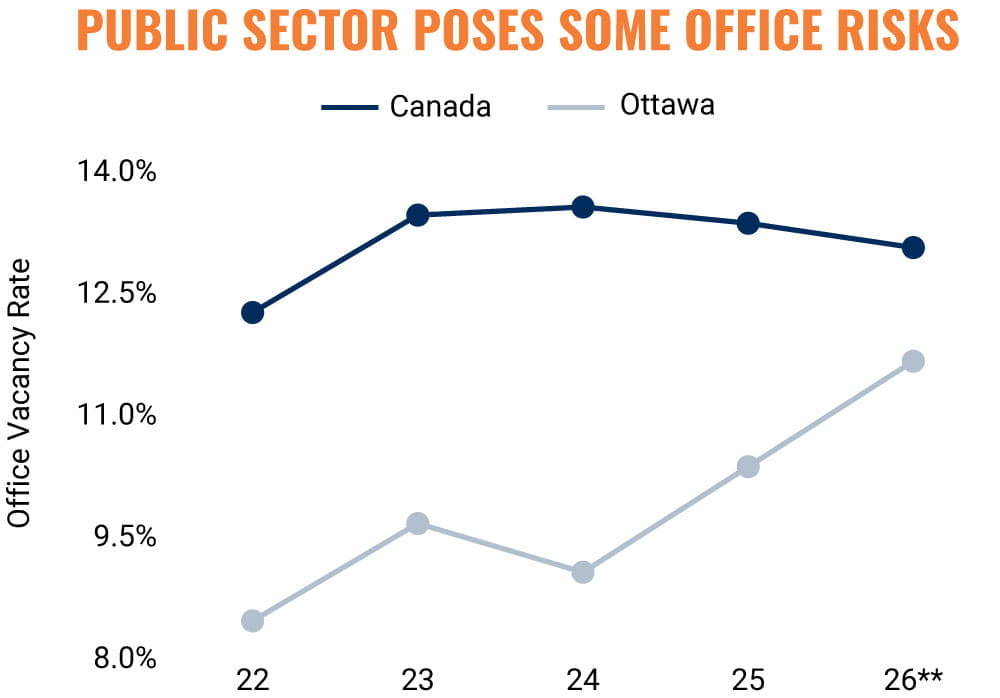
Office-using employment provides an encouraging demand signal. Improved labour market conditions should continue to support Canada’s ongoing office sector recovery. July’s employment gains included 18,000 positions in finance, insurance, and real estate, and another 17,000 in professional, scientific, and technical services, two major office-using industries. Stronger hiring and greater economic certainty should gradually improve tenant demand. Meanwhile, limited construction, greater return-to-office utilization, and tenants capitalizing on favourable rents to secure higher quality space are also improving market conditions. The national office vacancy rate has already declined 90 basis points from its 2024 peak to 13 per cent as of the second quarter.
Government cuts pose some risks to monitor. Despite an improving private-sector outlook, public-sector downsizing remains a risk for office markets with significant government exposure. Public administration payrolls fell by 15,000 positions in July, while total public-sector employment fell by 27,000. Further reductions could occur as governments pursue operational efficiencies and restrain spending, potentially reducing office requirements. Ottawa faces the greatest exposure, with office vacancy trending higher since early 2025 even as the national rate has declined. This divergence highlights the potential impact of federal workforce reductions on the nation’s capital, although continued private sector hiring should support the broader office recovery.
* Through July; ** Through 2Q | Sources: Altus Data Solutions;
Capital Economics; CoStar Group, Inc.; Oxford Economics; Statistics Canada
TO READ THE FULL ARTICLE