Research Brief
Canada Housing
July 2026

Housing Market Stabilization Gains Momentum as Policy Supports Construction
Housing activity continues to recover. Canadian home sales increased 0.5 per cent monthly in June, building on gains in April and May and lifting national activity 7 per cent above March levels. Market conditions tightened modestly as new listings declined 1.3 per cent, pushing the sales-to-new-listings ratio above 50 per cent for the first time this year. Meanwhile, the median price of a single-family home was unchanged from May, marking the third consecutive month of stabilization. Although the benchmark price remained 3.1 per cent below year-ago levels, the pace of decline has narrowed since the start of the year as the market continues to recover. With fixed mortgage rates easing from April peaks and housing conditions improving, the second half of the year will likely continue to strengthen.
Lower borrowing costs are supporting demand. While the Bank of Canada has maintained its overnight rate at 2.25 per cent for six consecutive meetings, easing inflation concerns and improving economic conditions have reduced expectations of further policy tightening. More importantly for the housing market, Government of Canada bond yields have retreated from their springtime highs, allowing lenders to gradually lower fixed mortgage rates. Although borrowing costs remain above pre-pandemic norms and are showing some volatility due to the conflict in the Middle East, improving affordability and greater certainty around the interest rate outlook are encouraging more buyers to re-enter the market. If bond yields remain relatively stable, financing conditions should continue to improve throughout the remainder of the year, supporting a gradual recovery in housing activity.
Commercial Real Estate Outlook
Development incentives aid rental construction. Ontario’s recently announced Development Charge Reduction Program is expected to lower construction costs by reducing municipal development charges for eligible projects. Combined with expanded GST relief for new housing and enhanced CMHC financing for purpose-built rental projects, these measures further improve development economics, despite elevated costs. While these policies should help address Canada’s long-term housing shortage, they are also expected to extend the current wave of apartment completions. As a result, multifamily fundamentals are likely to remain under pressure in the near term as higher vacancy and slower rent growth persist until new supply is absorbed.
British Columbia targets excess condominium supply. The federal and provincial governments have introduced programs to purchase newly completed and unsold condominium units, with many to be converted into below-market housing. The initiative aims to reduce excess inventory caused by slower sales while providing developers with additional liquidity to complete and finance projects. Although the program is unlikely to affect nearterm market conditions, it should help stabilize the development pipeline and limit financial stress among builders. More broadly, continued government support for housing should reinforce longterm housing supply and improve confidence across the residential construction sector.

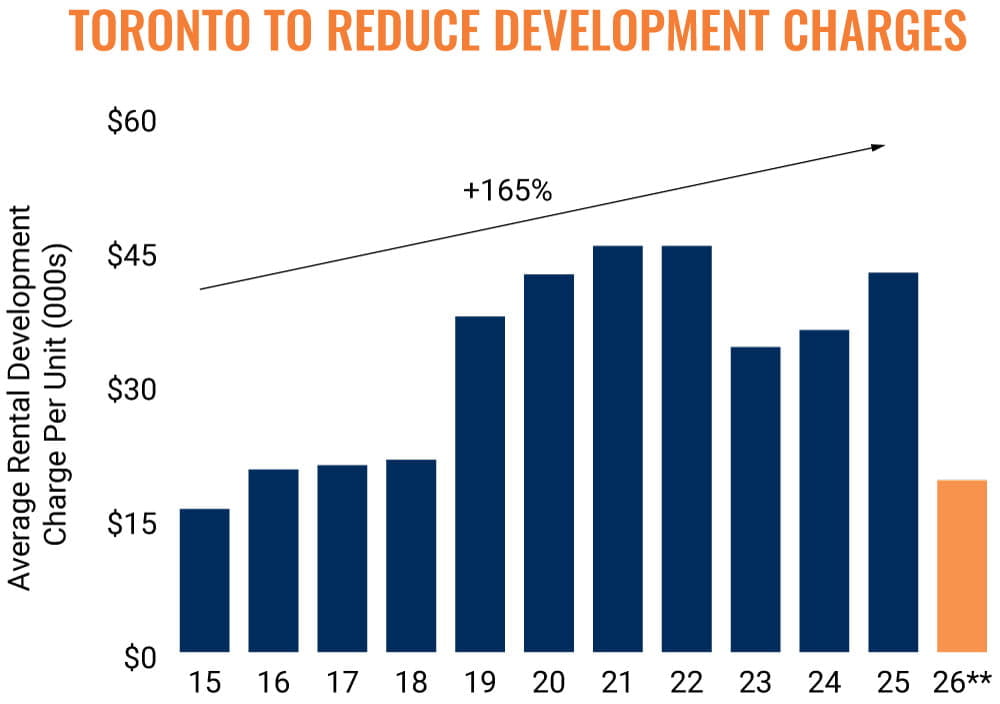
* Through June; ** Development Charge Reduction Program estimate | Sources: Altus Data Solutions; Capital Economics;
City of Toronto; CMHC; CREA; Oxford Economics
TO READ THE FULL ARTICLE