Research Brief
Canada Inflation
June 2026

Commercial Real Estate Investors Could Benefit From Contained Underlying Inflation
Temporary factors push inflation higher. Canada’s consumer price index rose 0.5 per cent month over month, lifting the annual inflation rate by 40 basis points to 3.2 per cent in May. Higher gasoline prices were the largest contributor, reflecting earlier energy market disruptions linked to the conflict in the Middle East. Travel-related costs also increased, with higher jet fuel prices pushing up air transportation and travel service costs. Food prices rebounded after an unexpected April decline, driven largely by drought-related pressures on fresh produce. While a handful of other categories saw notable price increases, including home entertainment equipment amid global supply shortages, the broader inflation picture remained more balanced.
Core measures remain at target. Underlying inflation pressures remain relatively contained, supporting the Bank of Canada’s decision to keep interest rates unchanged. Excluding the most volatile components, the Bank’s preferred core inflation measures continued to signal that price growth is broadly tracking near the two per cent target. Shelter costs declined modestly during the month, while prices for discretionary goods such as clothing were largely unchanged, suggesting consumer demand remains subdued. Although the three-month annualized pace of core inflation edged higher, the annual rate held at a target-consistent 2.1 per cent. With oil prices having retreated from recent peaks and broader price pressures remaining muted, policymakers are likely to view the recent increase in headline inflation as temporary rather than the start of a more persistent inflationary trend.
Commercial Real Estate Outlook
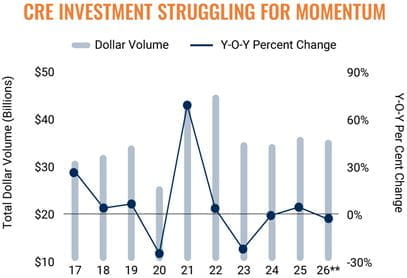
Bond yields remain a source of uncertainty. While underlying inflation remains broadly consistent with the Bank’s target, longerterm borrowing costs continue to face upward pressure from a range of evolving risks, including geopolitical tensions, trade uncertainty, and persistent government deficits. Although many of these factors are dynamic and could reverse quickly, they have contributed to heightened volatility in bond yields throughout 2026. This uncertainty is contributing to a more cautious investment environment, with some buyers delaying acquisition decisions until borrowing costs become more predictable and market conditions stabilize. Consequently, annual investment dollar volume has generally held firm around $35 billion for the past three years.
Apartment performance continues to normalize. Shelter prices declined 0.1 per cent monthly in May, reflecting softer rental market conditions. A surge in rental completions, combined with slower population growth amid tighter immigration policies, has lifted vacancy from recent lows to roughly 4 per cent and stalled rent growth. While fundamentals remain healthy by historical standards, investors face a more competitive leasing environment, particularly in newly completed properties where incentives and rent discounts have become increasingly common. As additional supply is delivered through 2026, apartment rent growth is expected to remain subdued, helping ease one of the largest sources of inflationary pressure over the past several years.

* Through May; ** Trailing 12 months through 1Q | Sources: Altus Data Solutions; Capital
Economics; CMHC; CoStar Group, Inc.; Oxford Economics; Statistics Canada
TO READ THE FULL ARTICLE