Research Brief
Gross Domestic Product
May 2026

Private Investment Fuels Economic
Growth, Bolstering Select Property Types
Inflation remains elevated, weighing on retail assets. The core PCE Price Index rose 3.2 percent year-over-year in March, indicating notable pricing pressures. Elevated inflation, particularly in energy-related categories, has slowed consumer spending growth. Real PCE increased at a 1.6 percent annualized rate in the first quarter, marking the second slowest quarterly gain since 2024. This slowdown has also weighed on retail properties, as the sector recorded more than 4 million square feet of net space relinquishment in the first quarter, pushing the national vacancy rate up to 5.0 percent, the highest since 2021.
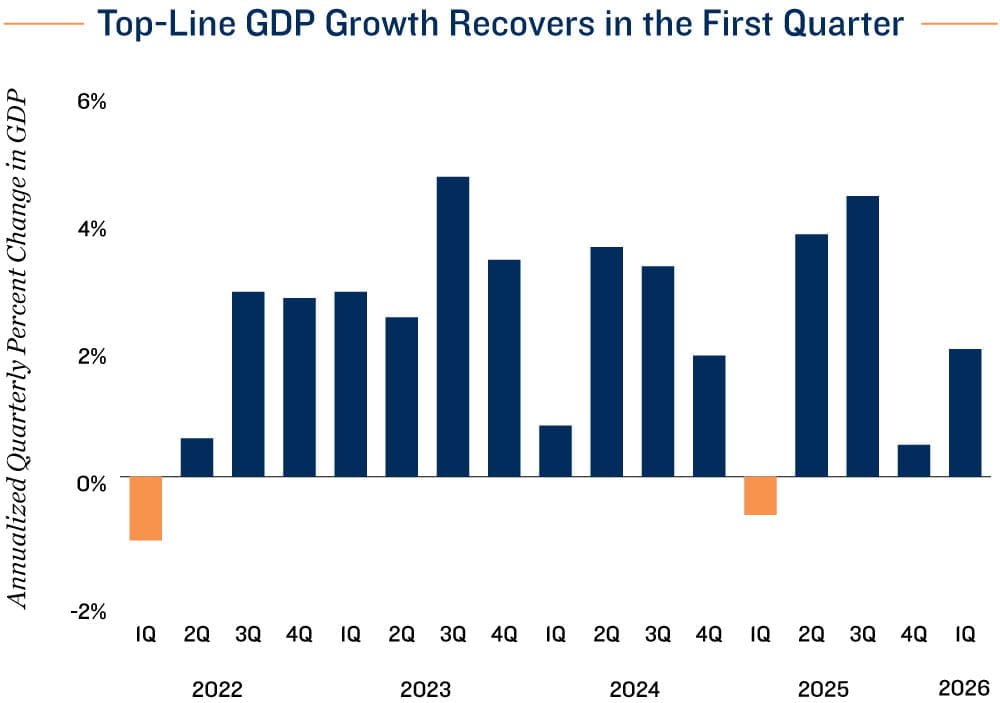
Private investment remains the primary growth driver. In contrast to softer consumption, gross private domestic investment expanded at an annualized 8.7 percent in the first quarter, representing the strongest quarterly reading since 2024. This growth was driven by investments in software, computing capacity, and technology-related infrastructure tied to the expansion of AI models and data centers. While investment in these areas remains high, emerging constraints — such as power availability, supply chain bottlenecks, and increasing regulatory scrutiny — have led to project delays and cancellations in some markets, suggesting potential moderation in investment growth over the medium term. Still, if private investment spurs infrastructure improvement, it could also benefit industrial properties more broadly, particularly in hot spots such as Northern Virginia and Central Ohio.
2.0% |
3.2% |
|
Annualized Rate of |
Year-Over-Year Change in Core |
Sources: Marcus & Millichap Research Services; Bureau of Economic Analysis; Bureau of Labor
Statistics; CoStar Group, Inc.; RealPage, Inc.; U.S. Census Bureau
TO READ THE FULL ARTICLE