Research Brief
Canada Industrial
March 2026

Alberta Positioned to Weather Subdued Manufacturing Ahead of Trade Talks
Further clarity needed for BoC to change policy. The labour force survey shows that the manufacturing sector continued shedding jobs in February, suggesting production could remain weak in the near term. Coupled with soft sales data in January, GDP growth in the first quarter is estimated to come in below 1.0 per cent at an annualized pace — lower than the Bank of Canada’s latest projection of a 1.8 per cent increase. This soft growth backdrop is further complicated by rising uncertainty surrounding the ongoing war in the Middle East and the upcoming joint review of USMCA. As a result, the BoC is expected to remain on the sidelines, waiting for greater clarity before adjusting its policy stance.
Alberta poised to benefit from geopolitical conflict. Amid the ongoing Iran war, which has pushed global oil prices higher, Alberta could see an economic boost if prices remain elevated. Periods of rising oil prices have historically supported employment growth, lifting business and consumer spending and strengthening space demand across major commercial property sectors. Should oil production growth tighten available pipeline capacity, the discount between Western Canadian Select (WCS) and West Texas Intermediate (WTI) could widen sufficiently to make oil-by-rail shipments economically viable. This occurred in 2018-2019 when transportation constraints drove a surge in rail exports. Under such conditions, demand for energy-related industrial space — particularly rail-linked logistics and storage facilities — could strengthen.
Sales activity faces pressure from geopolitical uncertainty. While investment in Alberta’s industrial sector could see gains amid the ongoing oil price surge, geopolitical uncertainty tends to tighten financial conditions, weighing on overall sales activity nationwide. Higher risk premiums and caution among capital allocators could delay or reduce investment commitments, particularly ahead of the mid-year renegotiation of the North American trade deal. Overall, the net effect on investment activity will depend on how long oil prices remain elevated and whether inflationary pressures influence borrowing costs and occupier fundamentals over the long term.

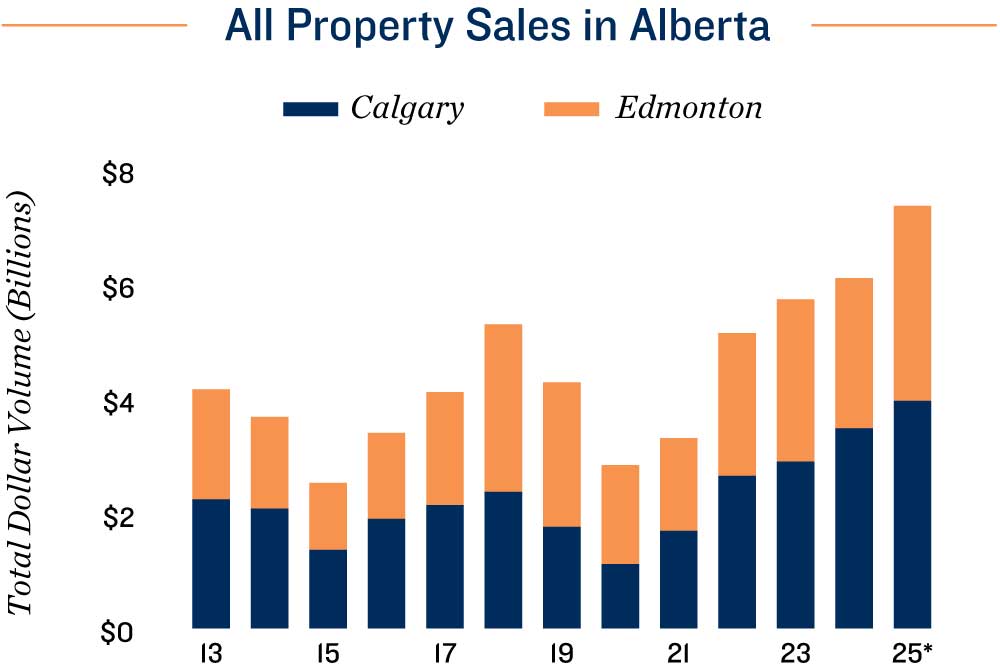
* Trailing 12 months through 3Q
Sources: Marcus & Millichap Research Services; Altus Data Solutions; Capital Economics; Costar;
Oxford Economics; Statistics Canada
TO READ THE FULL ARTICLE